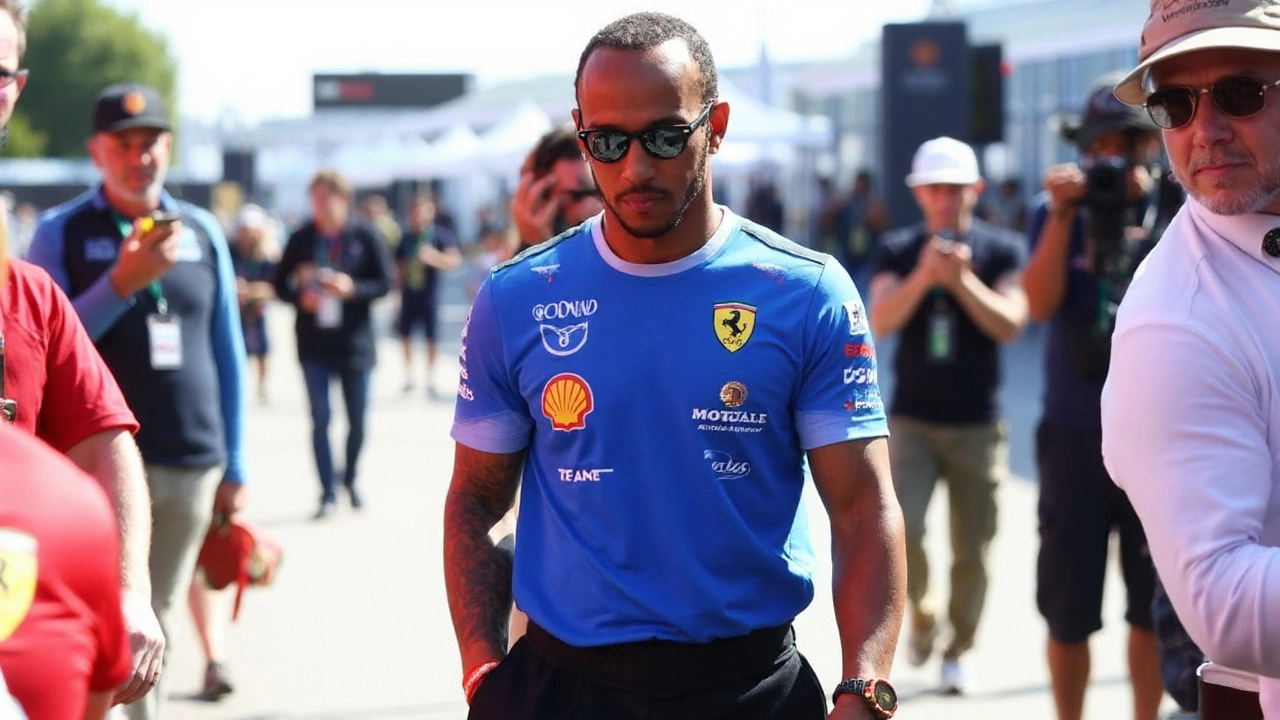
Ferrari’s highs, lows, and why Hamilton knew what he was signing up for
Lewis Hamilton has described his early experience at Ferrari as an “emotional rollercoaster.” For anyone who’s watched the team over the past two decades, that tracks: one weekend can feel like champagne and confetti, the next like a post‑race debrief with more questions than answers.
This move was years in the making. After more than a decade at Mercedes—seven world titles in the bank and a legacy carved in silver—Hamilton bet on red. Ferrari hasn’t had a drivers’ champion since 2007 and last won the constructors’ crown in 2008, but the pull of Maranello is different. It’s history, pressure, and national theater rolled into one.
There’s also a clear project on the table. Under team principal Frédéric Vasseur, Ferrari has tightened its factory‑track loop, reworked decision‑making on the pit wall, and pushed for cleaner upgrades that actually correlate from wind tunnel to track. Hamilton’s timing lines up with a bigger pivot: the 2026 rules reset, which will overhaul engines and aerodynamics. If you’re going to bet on a rebuild, you want to be inside the room before the blueprints are final.
The pairing with Charles Leclerc adds another layer. Leclerc is home‑grown, fast over one lap, and deeply embedded in the team’s culture. Hamilton brings race‑craft, political savvy, and decades of setup feel. It’s a blend Ferrari hasn’t had in a while: youthful speed alongside a driver who’s lived through title fights, regulation shifts, and the grind of development seasons.
Why call it a rollercoaster? Because Ferrari is built on emotion as much as engineering. The tifosi show up in their thousands at Monza and beyond, the Italian press dissects every radio message, and the factory feels the mood swings—Monday mornings after a rough Sunday are different in Maranello. When you win here, you don’t just win a race; you light up a country. When you lose, you don’t just lose points; you carry it all week.
Inside the transition: culture shock, engineering reality, and the 2026 bet
Switching teams isn’t just about colors. It’s a new steering wheel layout, fresh software, different brake materials, and a distinct way of calling strategy. Even the language on the radio changes—shorter codes, different priorities, another rhythm of practice runs and long‑run reads. Ferrari’s car traits in recent years—quick in slow and medium corners, sometimes sensitive over long stints—ask for a specific driving style. Adapting to that is part art, part data.
Ferrari’s volatility has had familiar roots: strategy misreads under pressure, operational hiccups in tight races, and development sprints that sometimes peaked early in a season. The team has worked to flatten those spikes—simpler decision trees, clearer roles on the pit wall, and a steadier upgrade cadence. Hamilton arrives as both driver and amplifier: when his feedback is sharp, a team tends to iterate faster; when things wobble, the spotlight burns hotter.
Life at Maranello is its own ecosystem. The factory is compact, the processes are personal, and the expectations are public. Fans gather outside the gates, staffers live within the noise of the brand, and every new part carries a story. That intimacy can supercharge momentum—people run a little faster when the car is quick—and it can make setbacks sting harder. That’s the rollercoaster he’s talking about.
The Leclerc‑Hamilton dynamic matters for race days and for the factory’s week‑to‑week grind. Two elite drivers push each other in qualifying, split setup paths on Fridays, and stress‑test upgrades. It also creates pressure on strategy: who gets the undercut, who runs the alternate, when to protect a result versus gamble for a win. Ferrari has signaled a more pragmatic approach—bank points when the car isn’t the class of the field, attack when the window opens. That’s exactly how you steady a team with big ambitions.
Then there’s 2026. Power units shift toward greater electrical deployment, and aero gets a reboot. Ferrari wants to arrive at that moment with a car concept that’s predictable, scalable, and gentle on tires—three things that win championships across long seasons. Hamilton’s value here isn’t just lap time; it’s knowing what a title‑capable car feels like in June and in October, and steering the project away from dead‑ends before they eat months of development.
Why does this story matter beyond Ferrari and one driver? Because F1 swings on narrative and momentum. If Ferrari stabilizes its execution and gives its drivers a wide operating window, it pulls the whole grid into a tougher fight. If the old unpredictability creeps back, the pressure will spike and the cycle repeats. That tension—between promise and proof—is why a single phrase like “emotional rollercoaster” lands so hard in this paddock.
For now, the signals are clear: a legendary team tightening its process, a superstar adapting to new tools, and a clock ticking toward a rules reset that will define the next era. The thrill and the nausea come from the same place—the sense that, at Ferrari, every small gain or mistake can swing a season. That’s the ride Hamilton signed up for.
- What’s different for Hamilton: new car traits, new strategy language, new factory rhythms.
- What Ferrari needs: calm execution, reliable upgrades, tire‑friendly balance.
- What 2026 changes: engine emphasis on electrical power and a fresh aero map.
- What’s at stake: ending a title drought and reshaping the power order in F1.