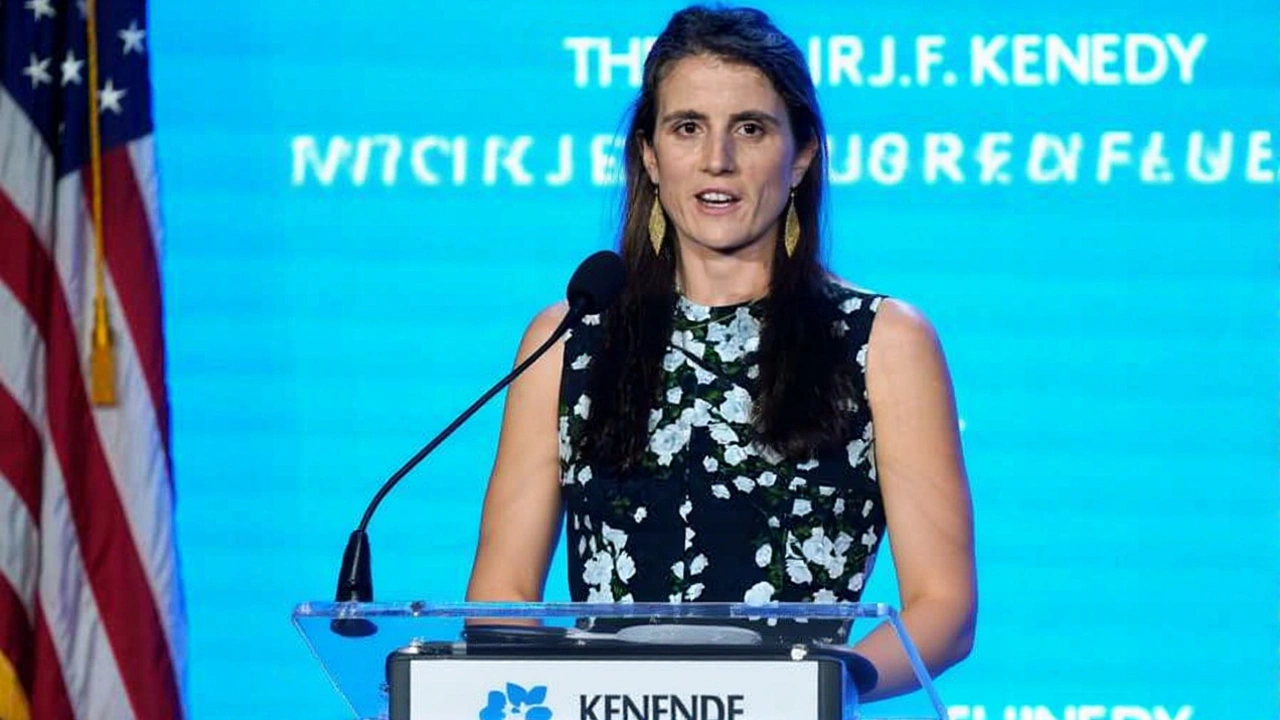
On the 62nd anniversary of President John F. Kennedy’s assassination, Tatiana Schlossberg, a 35-year-old environmental journalist and granddaughter of the late president, published a raw, haunting essay in The New Yorker revealing she has terminal acute myeloid leukemia with a rare genetic mutation called Inversion 3. Diagnosed just ten minutes after giving birth to her second child in May 2024 at Columbia-Presbyterian Hospital in New York City, Schlossberg was told she had about a year to live — despite having swum a mile the day before, nine months pregnant, and feeling healthier than ever. "I didn’t feel sick," she wrote. "I was one of the healthiest people I knew."
A Diagnosis After Joy
The shock of her diagnosis came at the worst possible moment. Schlossberg, daughter of Caroline Kennedy — former U.S. Ambassador to Australia and Japan — and Edwin Schlossberg, had just welcomed her baby girl. Within hours, doctors found her white blood cell count dangerously abnormal. She spent five weeks in the hospital before transferring to Memorial Sloan Kettering Cancer Center for a bone-marrow transplant. Chemotherapy followed, then a second transplant. In January 2025, she joined a clinical trial for CAR-T-cell therapy, a cutting-edge immunotherapy developed over decades with billions in public funding. But the prognosis remained grim. "Alive for a year, maybe," her doctors told her.
Criticism Amid Personal Crisis
While undergoing treatment, Schlossberg watched her cousin, Robert F. Kennedy Jr., rise to national power. Confirmed as Secretary of Health and Human Services in early 2025, Kennedy Jr. — once an independent presidential candidate — moved swiftly to reshape federal health priorities. Schlossberg details how his administration cut nearly $500 million in funding for mRNA vaccine research and canceled hundreds of grants from the National Institutes of Health. "Hundreds of clinical trials vanished overnight," she wrote. "People who were counting on those studies — people like me — were left in the dark."
She didn’t mince words: "He was on the national stage, while I was in a hospital bed, waiting for my blood to stop killing me. And he was the one deciding who got help — and who didn’t."

A Family Legacy of Tragedy
Her essay, titled "A Battle with My Blood," is steeped in the Kennedy family’s history of loss. She published it on November 22 — the same day her grandfather was shot in Dallas in 1963. She recalls her mother, Caroline, just three years old when the world changed. Her uncle Robert F. Kennedy was assassinated in 1968. Her uncle John F. Kennedy Jr. died in a plane crash in 1999. Her grandmother Jacqueline died of non-Hodgkin lymphoma in 1994. Cancer, it seems, has always found the family.
"I’ve spent my whole life trying to be good," Schlossberg confessed. "To protect my mother. To never add to her pain. Now I’ve given her another tragedy. And I can’t undo it."
The Human Cost of Policy Decisions
Her story isn’t just personal — it’s a mirror held up to the consequences of political choices. When funding for NIH research is slashed, it’s not abstract numbers. It’s real people — like Schlossberg — whose only hope lies in trials that vanish before they can enroll. The CAR-T therapy she received, though experimental, was born from decades of taxpayer-funded science. Yet under Kennedy Jr.’s leadership, those same funds were redirected, delayed, or eliminated.
"I didn’t ask for a political statement," she wrote. "But when your life depends on science, and the person in charge is actively dismantling the system that could save you — that’s a kind of violence."

Family, Love, and the Fight to Survive
Despite the odds, Schlossberg has not been alone. Her parents, her brother Jack — who recently announced a run for Congress — and her sister have been by her side daily for over a year and a half. They’ve raised her two children, sat through countless hospital visits, and held her through moments of despair. Her husband, Dr. George Moran, a physician himself, has been her anchor. "They’re the reason I’m still here," she says.
Her mutation, Inversion 3, is rare and aggressive. Standard treatments won’t work. That’s why she needed the clinical trials — the very ones that were canceled. She’s now in hospice care, but still writing. Still speaking. Still fighting to make sure her voice isn’t lost.
Frequently Asked Questions
How did Tatiana Schlossberg’s cancer diagnosis connect to her cousin’s policy decisions?
Schlossberg was undergoing CAR-T-cell therapy — a treatment developed through decades of NIH-funded research — when her cousin, Robert F. Kennedy Jr., as Secretary of Health and Human Services, cut nearly $500 million from mRNA vaccine and cancer research programs. Hundreds of clinical trials, including ones she might have qualified for, were canceled. She felt her life was directly impacted by those budget decisions.
What is Inversion 3, and why is it so difficult to treat?
Inversion 3 is a rare genetic mutation in acute myeloid leukemia where a segment of chromosome 3 is flipped, disrupting key genes that regulate blood cell development. It’s associated with poor response to standard chemotherapy and high relapse rates. Only experimental therapies like CAR-T or targeted transplants offer hope — which is why funding cuts to clinical trials are especially devastating for patients like Schlossberg.
Why did Schlossberg publish her essay on November 22?
November 22 marks the 62nd anniversary of President John F. Kennedy’s assassination. Schlossberg chose the date deliberately, tying her personal tragedy to the family’s long history of loss — including the assassinations of her uncles and her grandmother’s death from cancer. It was both a tribute and a protest: her illness, she implies, is part of the same legacy of suffering.
What impact has her essay had on public discourse?
Her essay sparked widespread media coverage and renewed debate over political interference in public health funding. Advocacy groups have cited her case in lobbying efforts to restore NIH budgets. Critics of RFK Jr. have used her story to question the human cost of his policy shifts, while supporters argue her personal experience shouldn’t override broader fiscal priorities — a tension that continues to divide public opinion.
How has Caroline Kennedy responded to her daughter’s diagnosis and public criticism?
Caroline Kennedy has not publicly commented on her daughter’s critique of Robert F. Kennedy Jr. But she has been present daily at her daughter’s bedside since diagnosis, helping raise her grandchildren and managing family affairs. Friends say she’s been "devastated but stoic," carrying the weight of another generation’s tragedy — much like she did after her father’s death.
What’s next for Schlossberg and her family?
Schlossberg is now in hospice care but continues to write and speak about her experience. Her brother Jack has intensified his congressional campaign, citing her fight as motivation to reform health policy. The family has established a small fund to support patients with rare blood cancers, hoping to turn grief into action. Her final wish, she says, is for people to remember: "Science saves lives. Politics shouldn’t decide who gets it."