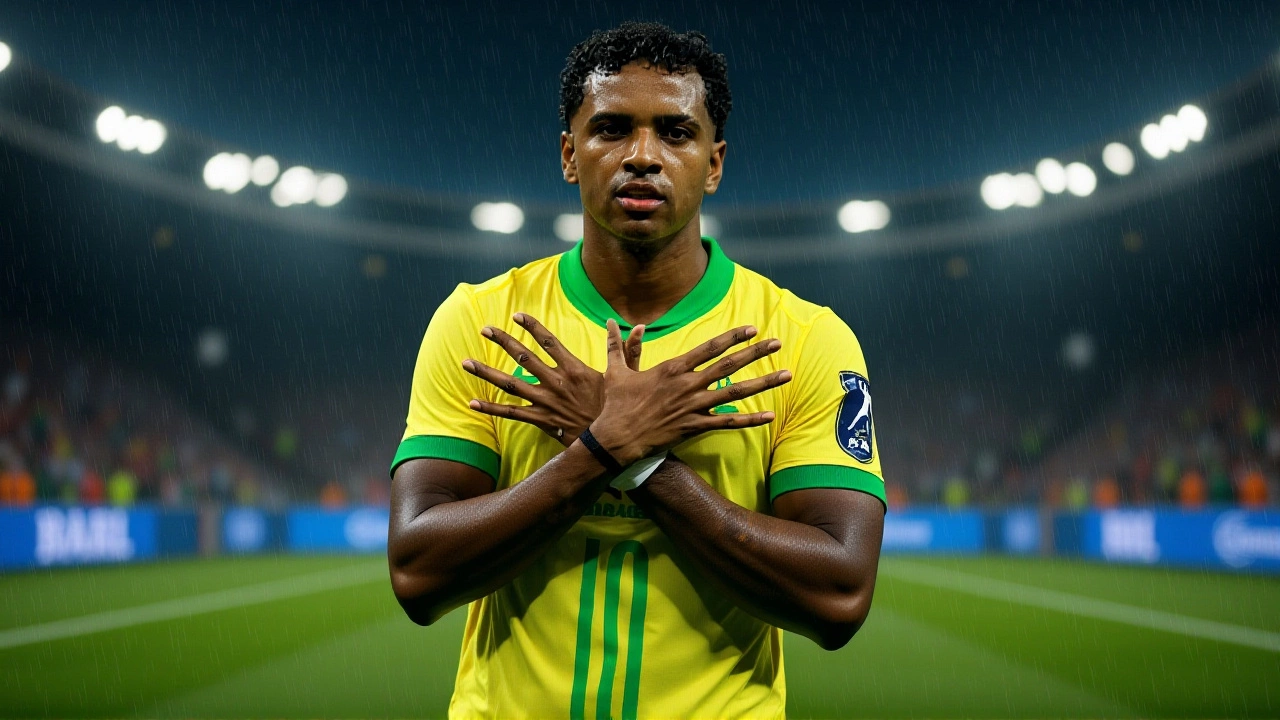
When Brazil national football team walked onto the pitch in Seoul on October 10, 2025, the odds favored a competitive showdown, not a demolition. Yet the final whistle blew at 90'+2' with a 5-0 victory that left the host side stunned and the world buzzing.
Background to the Friendly
The contest was part of the October 2025 FIFA international window (October 7‑15) and served as a final rehearsal before the 2026 World Cup, which will be co‑hosted by Canada, Mexico and the United States. Brazil arrived under the stewardship of Dorival Júnior, head coach of the Seleção since January 2024. His counterpart, Hong Myung‑bo, has been guiding the Korea Republic side since February 2024.
Both squads view the match as a tactical lab, but the disparity in recent form was evident. Brazil entered the friendly ranked No. 1 in CONMEBOL with 1,842.96 FIFA points, while Korea Republic lingered at 28th globally with 1,375.32 points. Historically, the two nations have met only three times in World Cups, each time resulting in narrow Brazilian wins. This time, however, the scoreline rewrote the record books.
Match Highlights and Goal Timeline
The match kicked off in the early evening, under the bright lights of the Brazil vs Korea Republic International FriendlySeoul. The first breakthrough came in the 13th minute when Estêvão, the 18‑year‑old forward currently on the books of Real Madrid, slipped between the Korean back‑line and tapped in a low finish.
Just four minutes later, Rodrygo, the 24‑year‑old winger, capitalised on a defensive lapse to double Brazil’s lead. By halftime the score read 2‑0, with both goals showcasing Brazil’s fluid, attacking philosophy.
The second half was a cascade of blood‑letting. Rodrygo struck again in the 47th minute, this time from the edge of the box, and followed up with another finish at 65 minutes – completing his brace. Estêvão mirrored the feat, netting his second goal in the 70th minute after a quick one‑two with Vinícius.
The fifth and final goal arrived in the 79th minute. Vinícius, often in the shadows of criticism, erupted with a solo drive past two defenders and slotted the ball home. The Brazilian attack had amassed five goals, while Korea Republic mustered only two shots, both off target.
The match officially ended at 90'+2', a foul by Korea Republic’s Won Du‑Jae in the dying seconds earning the final whistle.

Coaches' Strategies and Tactical Takeaways
Dorival Júnior opted for a high‑press system, forcing the Korean midfield into errors and creating space for the front three. The Brazilian side switched fluidly between a 4‑3‑3 and a more aggressive 3‑4‑3, allowing Estêvão to drift inside while Rodrygo hugged the flank. Post‑match comments from Dorival (not quoted publicly) hinted at a focus on rapid transitional play, a priority for the upcoming World Cup.
Hong Myung‑bo, on the other hand, stuck to a compact 4‑5‑1, hoping to absorb pressure and strike on the counter. The plan backfired as Brazil’s pressing left little room for Korea Republic to build out from the back. Analysts from beIN SPORTS noted that Hong’s inability to adjust after the first half contributed to the widening scoreline.
Statistical Breakdown and Player Performances
- Shots on target: Brazil 8 / 17 total, Korea Republic 0 / 2 total.
- Possession: Brazil 68 %, Korea Republic 32 %.
- Pass accuracy: Brazil 89 %, Korea Republic 74 %.
- Key passes: Vinícius created three clear‑cut chances – the most of any player on the pitch.
- Disciplinary record: One yellow (Won Du‑Jae) for Korea Republic; none for Brazil.
Beyond the numbers, the psychological edge was evident. Estêvão’s brace, achieved at just 18, marks him as one of the youngest dual‑goal scorers in Brazil’s senior history. Rodrygo’s second brace solidifies his resurgence after a season of mixed form at Real Madrid. Vinícius, who had faced media scrutiny, silenced doubters with a clinical finish and the most creative involvement of any player.

Implications Ahead of the 2026 World Cup
The result reinforces Brazil’s status as a heavyweight and provides a morale boost ahead of a crucial qualifier against Venezuela on November 15, 2025. The attacking trio’s chemistry suggests a tactical template Darival may replicate in the World Cup, especially against tighter defenses.
For Korea Republic, the defeat highlights a need to rethink defensive organization and midfield transition. Hong Myung‑bo’s side will regroup before the EAFF E‑1 Football Championship against Japan on December 10, where a tighter defensive setup will be mandatory.
Overall, the match serves as a vivid reminder that friendly fixtures, while often dismissed as warm‑ups, can expose strategic gaps and shape tournament narratives.
Frequently Asked Questions
How does Brazil's 5‑0 win affect its World Cup preparations?
The dominant performance boosts confidence in Dorival Júnior’s attacking system, especially the partnership of Estêvão, Rodrygo and Vinícius. It also offers concrete data on shot creation and pressing efficiency that can be fine‑tuned before the November qualifier against Venezuela.
What does the loss mean for Korea Republic’s upcoming matches?
The defeat underlines defensive frailties that Hong Myung‑bo must address before the EAFF E‑1 Championship. Expect a more structured midfield shape and perhaps a change in personnel to strengthen the back line against Japan.
Who were the standout players of the match?
Estêvão and Rodrygo each grabbed a brace, showcasing lethal finishing. Vinícius, despite recent criticism, created three clear‑cut chances and added the fifth goal, making him the most influential midfielder on the day.
What was the historical significance of the 5‑0 scoreline?
It marks Brazil’s largest margin of victory over Korea Republic in any official encounter, eclipsing the narrow 2‑0 win in the 1950 World Cup. The result resets the competitive balance between the two nations ahead of future meetings.
What were the viewership numbers for the friendly?
ESPN estimated a global audience of roughly 85 million viewers, reflecting strong interest across Asia and South America, even though precise broadcasting revenue figures were not disclosed.